Worth the Flight
Why Fakarava Belongs on Your French Polynesia Itinerary
Most travelers to French Polynesia never make it past Bora Bora. That’s exactly why you should.
Everyone knows the postcard: the overwater bungalow, the turquoise lagoon, the silhouette of Mount Otemanu at golden hour. Bora Bora is stunning, and it knows it. But if you’re willing to add one more inter-island flight to your itinerary — about an hour from Papeete — you’ll land somewhere that French Polynesia insiders consider the real discovery: Fakarava.
This remote coral atoll in the Tuamotu Archipelago is a UNESCO Biosphere Reserve, home to the world’s highest concentration of gray reef sharks, a pink sand beach, a working pearl farm older than most of the resorts in Bora Bora, and a lagoon so clear it barely seems real. It’s the kind of place where 800 people live, locals wave from their bikes, and the biggest decision you’ll make each day is whether to snorkel before or after lunch.
What Makes Fakarava Different
Fakarava is the second-largest atoll in French Polynesia — 60 kilometers long, with a lagoon that stretches 1,120 square kilometers — but it feels almost entirely untouched. There are no high-rise resorts, no cruise ship crowds, no staged luaus. What it has instead is raw, protected marine life, extraordinary diving, and an unhurried pace that’s increasingly hard to find anywhere in the Pacific.
The atoll holds two passes connecting the lagoon to the open ocean: the Garuae Pass in the north, the widest navigable pass in all of French Polynesia, and the Tumakohua Pass in the south, famous for a narrow underwater canyon called Shark’s Hole. Both passes are world-class drift dives, and the Tumakohua is consistently named among the top dive sites on the planet. During peak season (May through June), the walls of gray reef sharks in the passes reach densities that have caught the attention of National Geographic. Non-divers can experience the magic too — the lagoon’s snorkeling, especially near the passes and coral heads along the shore, is equally extraordinary.
Where to Stay: Havaiki Lodge
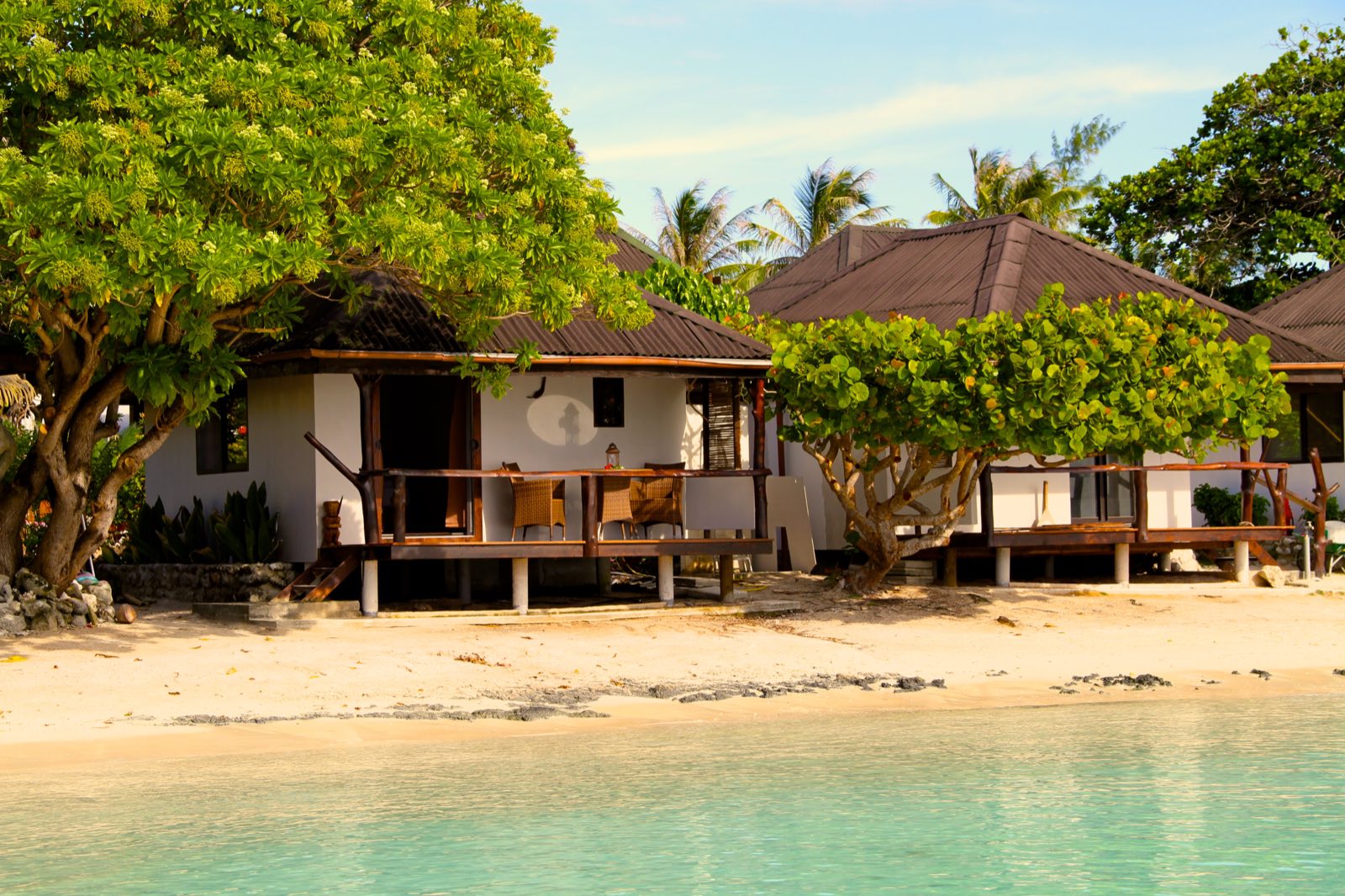
The most established property on the atoll is Havaiki Lodge, a charming, intimate guesthouse set on a pristine stretch of white sand just north of the main village of Rotoava. It’s not a resort in the traditional sense — there are 15 bungalows total, split between beachfront and garden settings — but what it offers is something harder to find: genuine atmosphere.
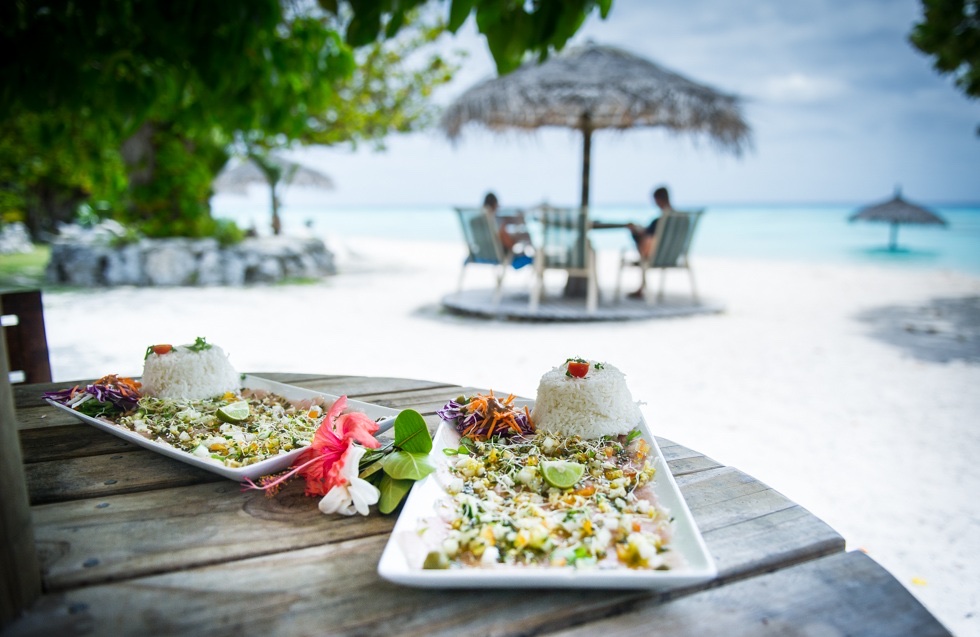
The beach bungalows sit directly on the sand with air conditioning and sweeping lagoon views. The garden bungalows are elevated above the ground, offering panoramic lagoon glimpses through the palms, with ceiling fans and a quieter feel. Half-board (breakfast and dinner) is included in the stay, and both are worth showing up for — the kitchen works with freshly caught fish and local ingredients, with a French and Polynesian fusion that consistently draws rave reviews.
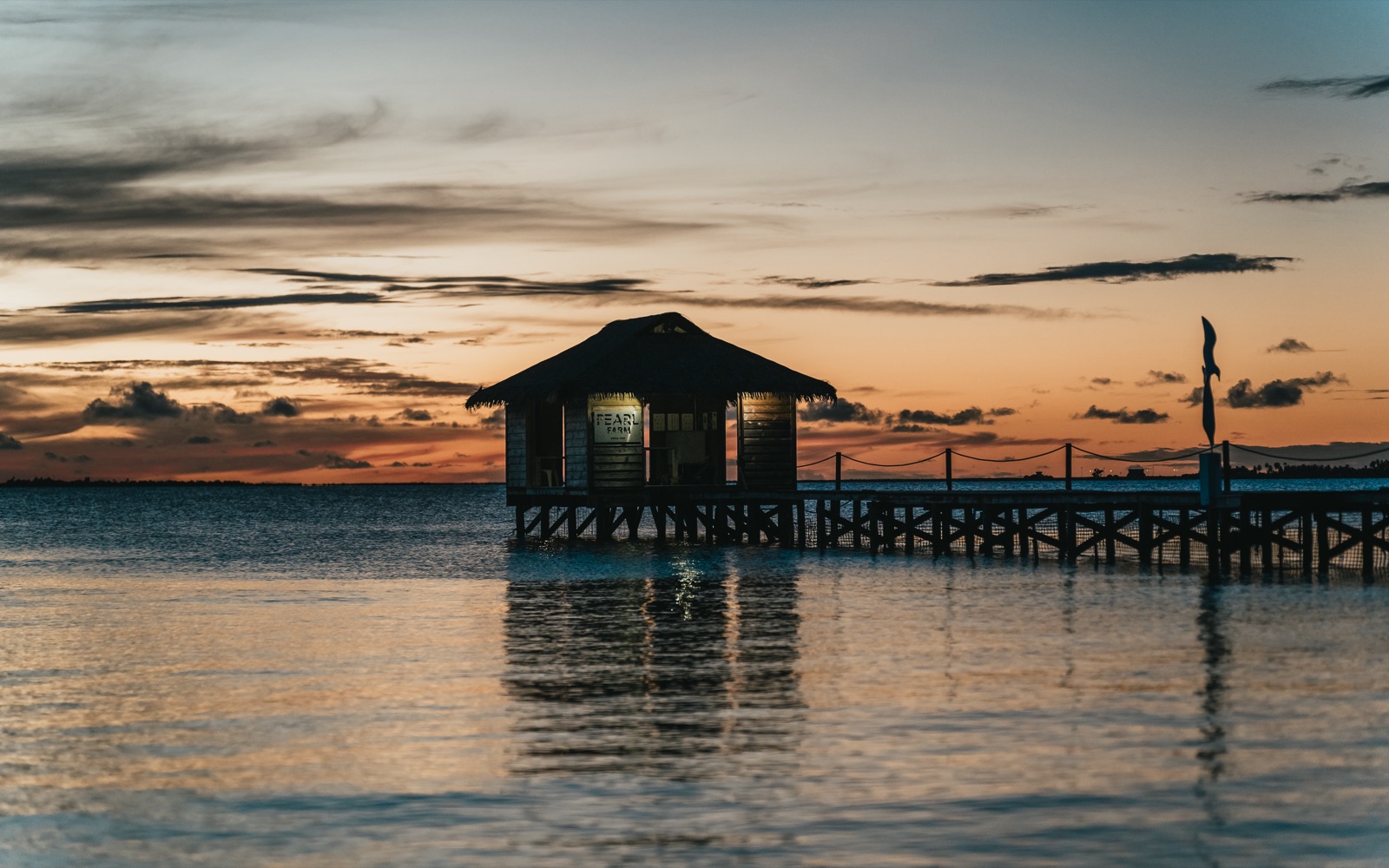
The property’s signature feature is its working pearl farm, the oldest still active on the atoll — dating to 1989. Guests have the opportunity to dive for oysters and participate in a pearl lottery, walking away with a genuine Tahitian black pearl as a souvenir. It’s one of those rare activities that’s both educational and completely memorable.
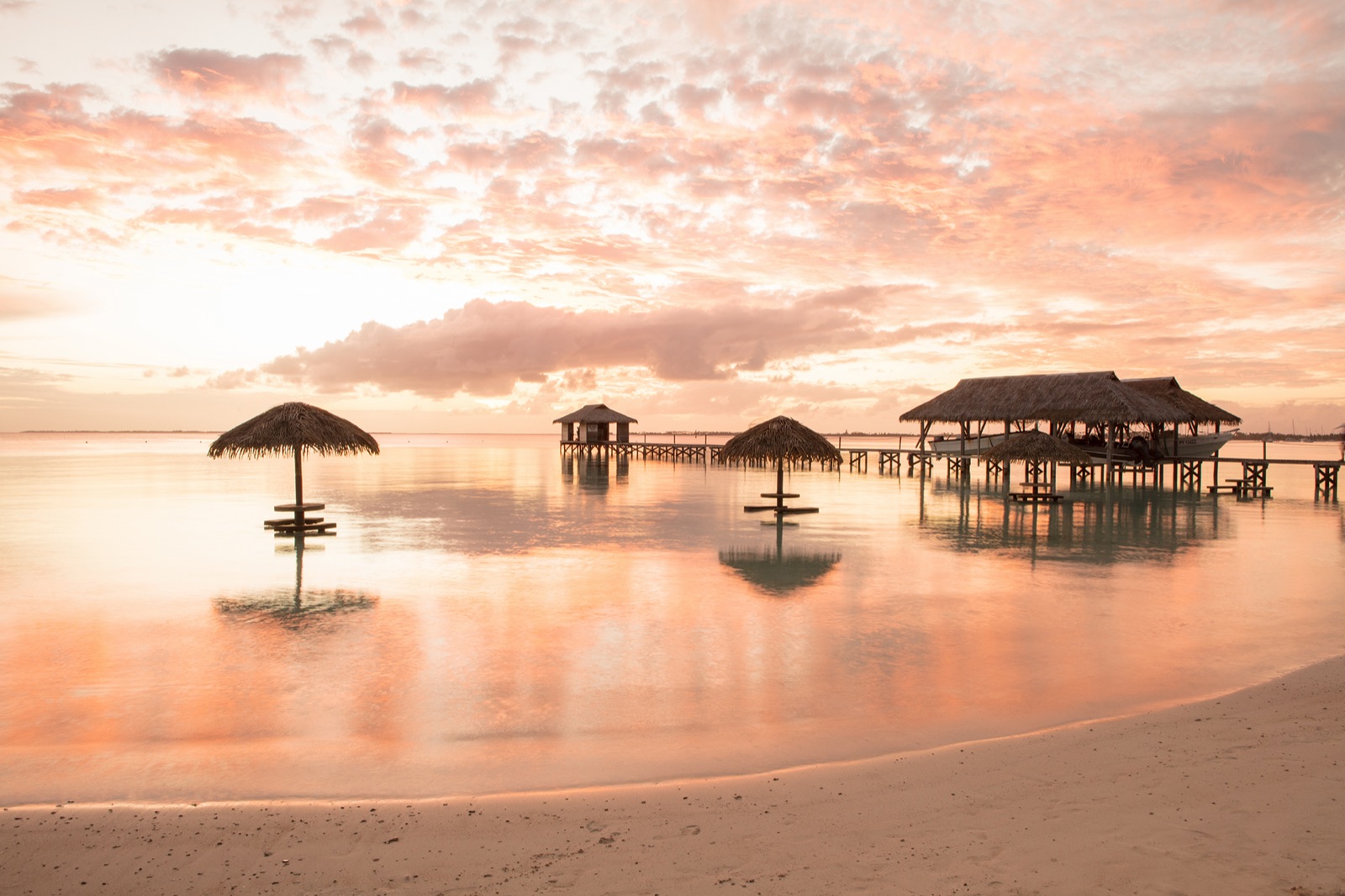
Perhaps the most photographed spot on the property: tables set directly in the shallow water of the lagoon, where you can sip cocktails while nurse sharks glide past your feet. That image says everything about the Havaiki Lodge experience — it’s not pretending to be luxury. It’s something better.
You can reserve directly with the lodge at havaiki.com — half-board included, two-night minimum.
What to Do
Dive or snorkel the passes. The North Pass (Garuae) is accessible and impressive; the South Pass (Tumakohua) is the bucket-list dive. Havaiki Lodge can connect you with local operators including TopDive, and diving should be booked as early as possible — trips fill quickly, especially in high season.
Bike the motu. The main island has about 30 kilometers of flat road, and most accommodations lend bikes for free. Pedal out to PK9 — a quiet beach 9 kilometers from the airport with a coconut tree leaning dramatically over the lagoon — or continue all the way to the North Pass.
Take a day trip to the pink sand beach. About an hour south by boat, Les Sables Roses is a beach with a blush-pink hue caused by crushed red coral washing ashore. It’s remote, rarely crowded, and genuinely unlike any beach you’ve seen before. Havaiki Lodge organizes excursions to the south.
Visit Tetamanu Village. At the far southern end of the atoll sits the former capital of the Tuamotus, where you’ll find the first Christian church ever built on the islands — constructed entirely from coral by early European missionaries. It’s a quiet, atmospheric stop on a full-day south pass excursion.
Watch the sunset from Havaiki’s bar. Every evening, the western-facing lagoon turns gold and pink. Pull up a chair — or better yet, wade out to one of those tables in the water — and watch it happen with a cocktail in hand. Locals and travelers alike agree: this is Fakarava at its best.
How to Get There
Fly into Papeete (PPT) on the island of Tahiti, where the only international airport in French Polynesia is located. From there, Air Tahiti operates inter-island flights to Fakarava (FAV) — the flight takes just over an hour. Air Moana is an additional option, particularly if you’re only stopping in Fakarava.
A word of planning advice: flights to smaller atolls sell out well in advance — sometimes more than two months ahead — so book inter-island legs as early as possible. Air Tahiti’s multi-island pass is worth considering if Fakarava is one stop on a broader French Polynesia island-hop.
Most accommodations arrange airport transfers. Once on the island, bikes, kayaks, and the occasional electric car or scooter are the primary ways to get around. There are no rental car agencies to speak of, but on an atoll with one road, you won’t miss them.
The Honest Word
Fakarava is not a polish-everything, swim-up-bar, butler-service destination. The accommodations are intimate, the pace is slow, and the island reminds you constantly that you’re a guest in a protected ecosystem. If that sounds like exactly what you need, it probably is.
The travelers who love it most — and they love it fiercely — say the same thing: it changed how they think about travel. That the turquoise lagoon, the walls of sharks, the pink beach, the pearl lottery, the cocktails in the water — none of it feels like tourism. It feels like being let in on something.
If you’re already planning a French Polynesia trip, Fakarava is the stop that will make the whole journey worth it.
Planning a broader French Polynesia escape? Start with our Bora Bora resort guide — the overwater side of the trip that pairs perfectly with a few quiet days on the atoll. And before you commit to the villa on stilts, read what nobody tells you about overwater bungalows.
Everything here comes from research and the accounts of divers and travelers who’ve made the trip — Fakarava is still on our own list. Once we’ve waded out to one of those tables ourselves, you’ll read about it.
Photos
Photos courtesy of Havaiki Lodge.